Pretty Scale Test: The Modern AI Alternative
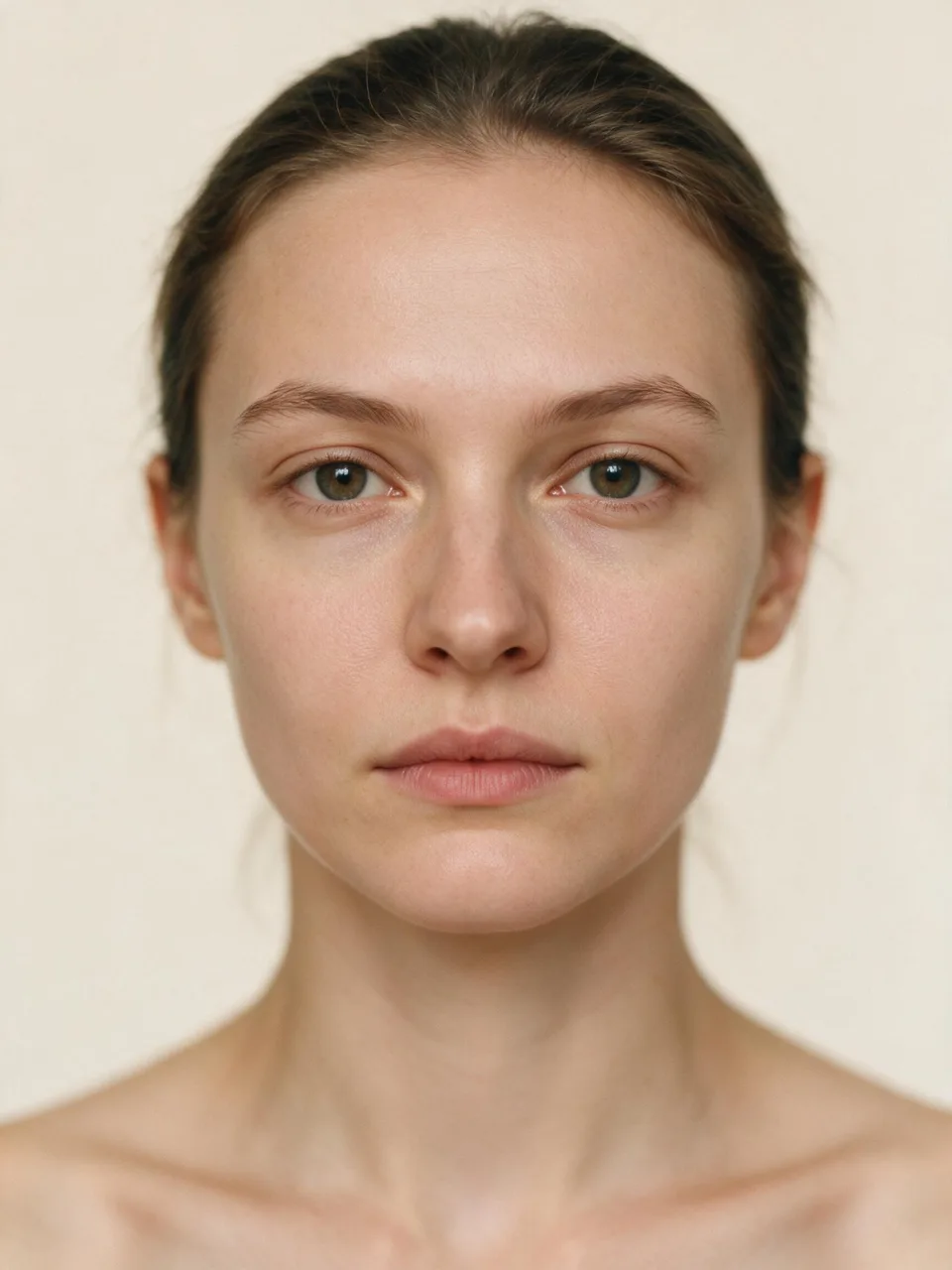
EXAMPLE ANALYSIS: 478 LANDMARKS MAPPED ON A SAMPLE PHOTO, NOT YOURS.
What a reading looks like
Real components · sample dataA starting line, not a verdict.
What we won't show you: a confidence band (not until our test-retest study ships) · a percentile (not until a reference population is published) · a skin score from one photo (lighting lies). Every "not scored" comes with its reason.
The original Pretty Scale has not been updated since 2013 and uploads your photo to a server; this test runs the measurement in your browser and never transmits the image.
The scan reads 478 landmarks in your browser and returns a score from 1 to 10 with a band label, in seconds, with no signup. This page rebuilds one named instrument rather than adding a second general one: what Pretty Scale measured, what changed, and what AI facial analysis does with the same photo now.
The Short Version
What Pretty Scale Actually Measures
Pretty Scale measures one uploaded photograph against a scoring formula it has never published. The original works the way most 2013 web tools worked: you send a face photo to its server, the measurement happens there, and a number between 1 and 10 comes back. What does not come back is the method. No published formula, no methodology page and no version number exist for that score anywhere on the site that produces it. Formula disclosure means writing down which measurements feed a score and how each one is weighted, so a reader checks the arithmetic instead of trusting the output.
The whole product still ships from a single homepage URL. That one page carries 2,169 ranked keywords with no dedicated tool page, no accuracy page and no visible change to the underlying method since 2013. An undisclosed formula behaves inconsistently for a plain reason. Nothing about it is fixed in public, so nothing about it gets reproduced, compared across versions, or corrected when it drifts. The same site later expanded sideways into body scoring, a subject facial measurement never covered, and that expansion is the one thing this rebuild leaves behind.
Some of the people who arrive here typed something closer to "am I pretty" than to the brand name, because on this search results page the product and the question have collapsed into each other. That is a different question with a better page behind it, named at the end of this one.
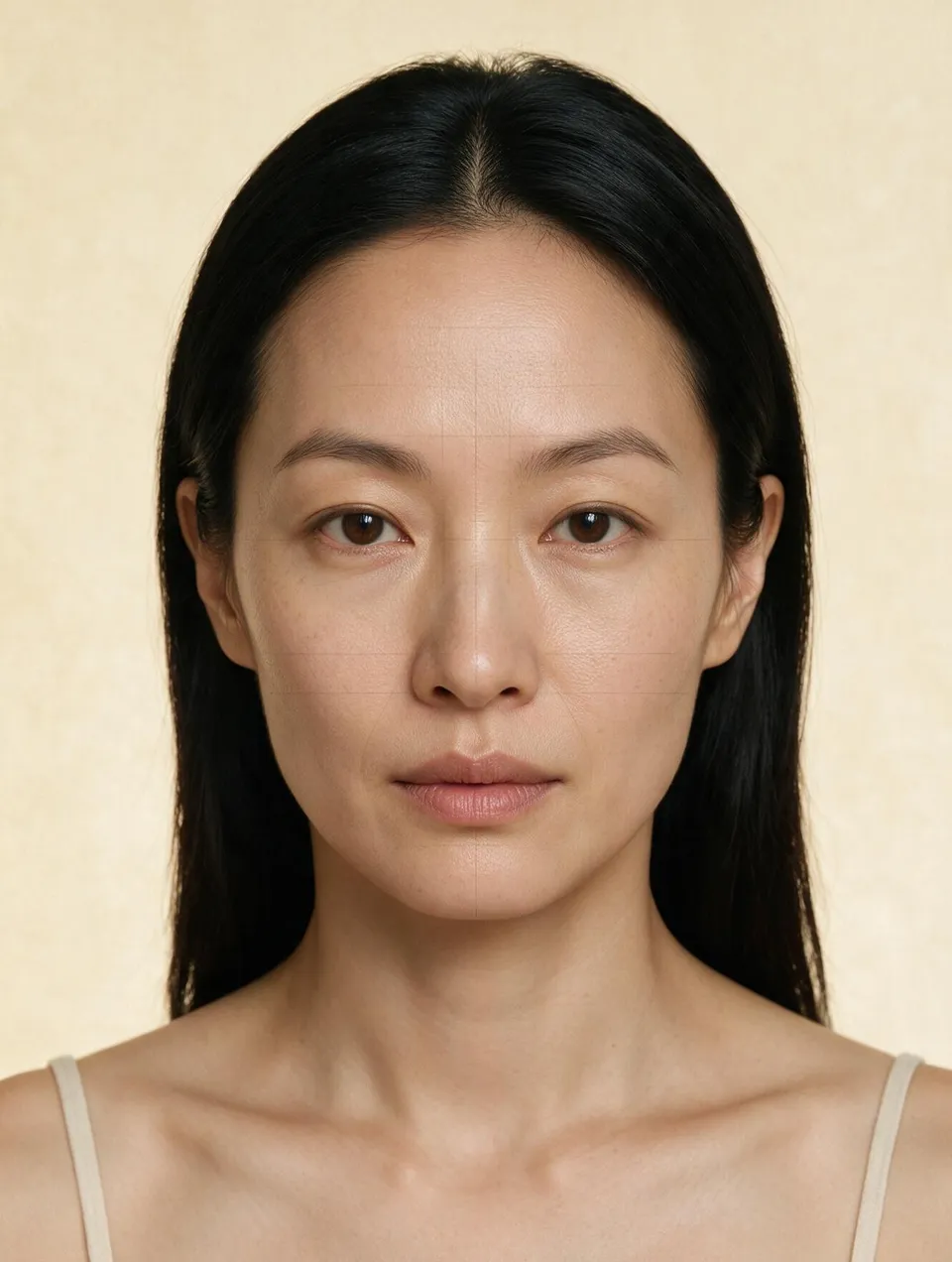
Disclosure looks like this in practice: the reference lines behind a score, drawn where a reader can check them. A published formula names which distances and ratios feed the number and the weight each one carries. The 2013 original prints its number without the lines; this rebuild publishes both, so the arithmetic can be followed instead of taken on trust.
How This Differs From the 2013 Original
This test differs from the 2013 original on four factors and matches it on one. The photo stays on your device instead of travelling to a server. The formula is published instead of undisclosed, the price is printed rather than missing, and the method carries a checked date. The row that matches is the output: both instruments return one value from 1 to 10 from a single photograph. That is the part of Pretty Scale worth keeping, and it is the reason this page rebuilds the instrument rather than arguing against it. A comparison that finds only differences reads as marketing, so the similarity is stated first and the four differences carry the weight.
| Factor | Pretty Scale (original) | This test |
|---|---|---|
| Photo handling | Uploaded to the site's server for scoring | On-device; photos never leave your browser |
| Formula disclosure | Not published on any page of the site | Published and versioned as Score v1.0 on the methodology page |
| Price | No price stated on the tool page | Free scan; $19 once for the full report, 7-day refund |
| Output scale | One value from 1 to 10, from one photo | One value from 1 to 10, from one photo (unchanged) |
| Method last verified | 2013 | August 29, 2026, re-checked every 120 days |
Every cell above was checked against the original's own live pages on August 29, 2026. Where the original publishes nothing on a factor, the table says so rather than filling the gap with a guess. If Pretty Scale publishes its formula, prints a price, or moves its scoring off its server, the row that says otherwise is wrong that day rather than merely old. This page carries a 120-day re-check for exactly that reason, instead of a publication date and silence afterwards.
What Your Score Means
Your score is one value from 1 to 10 with a band label, produced by a 478-landmark AI facial analysis that runs entirely in your browser. The same photograph and the same score version return the same number every time, because the formula is fixed in public and tagged as Score v1.0. That is a narrower claim than the original ever made, and it is the only claim this instrument makes about its own output: reproducible, not authoritative.
Two things this scan withholds on purpose: no percentile and no confidence band. A percentile is a claim about a population, and no published distribution of this instrument's own scores exists yet. A confidence band is a claim about measurement error, and that number waits on a test-retest study this site has not finished. Both ship when the data behind them exists, not before, which is the same rule every other tool here follows.
The band ladder lives on one page rather than being retold on every tool: what a 1-10 attractiveness score means. That page covers what a 6 means next to a 7, and why the distance between them is shorter than it looks. Your attractiveness score reads the same way there as it does here, because both pages describe one formula.
Is Pretty Scale Accurate?
Pretty Scale has no checkable accuracy figure, because its scoring formula has never been published and no independent test of its scores exists.
Accuracy and reproducibility are different properties, and only one of them is available on either instrument today. Accuracy asks whether a score matches how people actually rate a face, and answering it takes a published formula, a named sample and a test somebody outside the company ran. None of those exists for the original. Reproducibility asks the smaller question: does the same input return the same output. This test answers that one and shows its work, because the same photo scored twice under Score v1.0 returns the same number. Reproducibility is not a claim that the number is right about you.
Nobody in the ten results this brand name returns publishes a formula, a methodology page or an accuracy study. Disclosure is the only comparison a reader can verify here without taking somebody's word for it. Where this measurement breaks, and the photo conditions that break it, are written down: how we measure, and where the measurement fails.
What This Score Cannot Tell You
The accounting is finished: what the original measures, what this one measures instead, and what neither number reaches. Most people who land on this page typed a brand name rather than a question, and everything below is for the ones who meant a question.
If You're Comparing Attractiveness Tools
If you're comparing attractiveness tools rather than checking one brand name, three pages on this site answer that comparison more directly than this one does. Each covers something this page leaves out on purpose. The broadest is a modern AI attractiveness test, which runs the full measurement set instead of the single number rebuilt here and carries the research behind each component alongside it.
A question about yourself rather than about a product belongs on the honest am-I-pretty test. It runs the same on-device scan, adds a quiz for anyone who prefers not to use a photo, and carries the support resources a self-directed question earns and a brand comparison does not.
The fastest route to a number is a free AI face rating, which skips the quiz, the comparison and the interpretation and returns the score on its own. All three run the same engine and the same published formula as this page, so one photo returns the same number on any of them, whichever door you came through.
It measures geometry, not worth. The number tells you where you start. It never tells you what you are.
on every page
of this site
Your report, in full.
- Side profile
- Skin, measured properly
- Averageness
- Dimorphism
- Ranked plan
Paid photo deleted within 24 hours · never used for training
- 40+ measurements, 7 regionsPP. 2-9
- Side profile, from a second photoPP. 10-13
- What moved your score, rankedPP. 14-16
- Four week plan and day 30 re-scanPP. 17-20
Frequently Asked Questions
What Is a Good Pretty Scale Score?
A good Pretty Scale score is a relative position rather than a fixed number, so no single value on the 1 to 10 range qualifies as good on its own. Where the band boundaries sit, and why the distance between a 6 and a 7 is shorter than it looks, is set out in full on the 1-10 attractiveness scale guide.
Is There a Better Version of Pretty Scale?
Yes, on three checkable points: the scan runs on your device, the formula is published and versioned, and the price is printed as $19 once instead of left off the page. The output itself is not better, it is the same 1 to 10 value the original returns from the same single photograph.
What Does "Pretty Scale 1 to 10" Mean?
Pretty scale 1 to 10 means the score sits on a ten-point range, 1 at the low end and 10 at the high end, read from one photograph. That range is the one thing this test carries over from the 2013 original unchanged, and what each point on it describes is explained on the 1-10 attractiveness scale guide.
Is Pretty Scale the Same Site as This One?
No, this is a different site run by a different company with a different formula, and it has no affiliation with prettyscale.com or prettyscaleme.com. This page rebuilds the idea those sites made popular; it does not continue their product, their scoring or their data.